
HIPS Sheet Extruder
2025-03
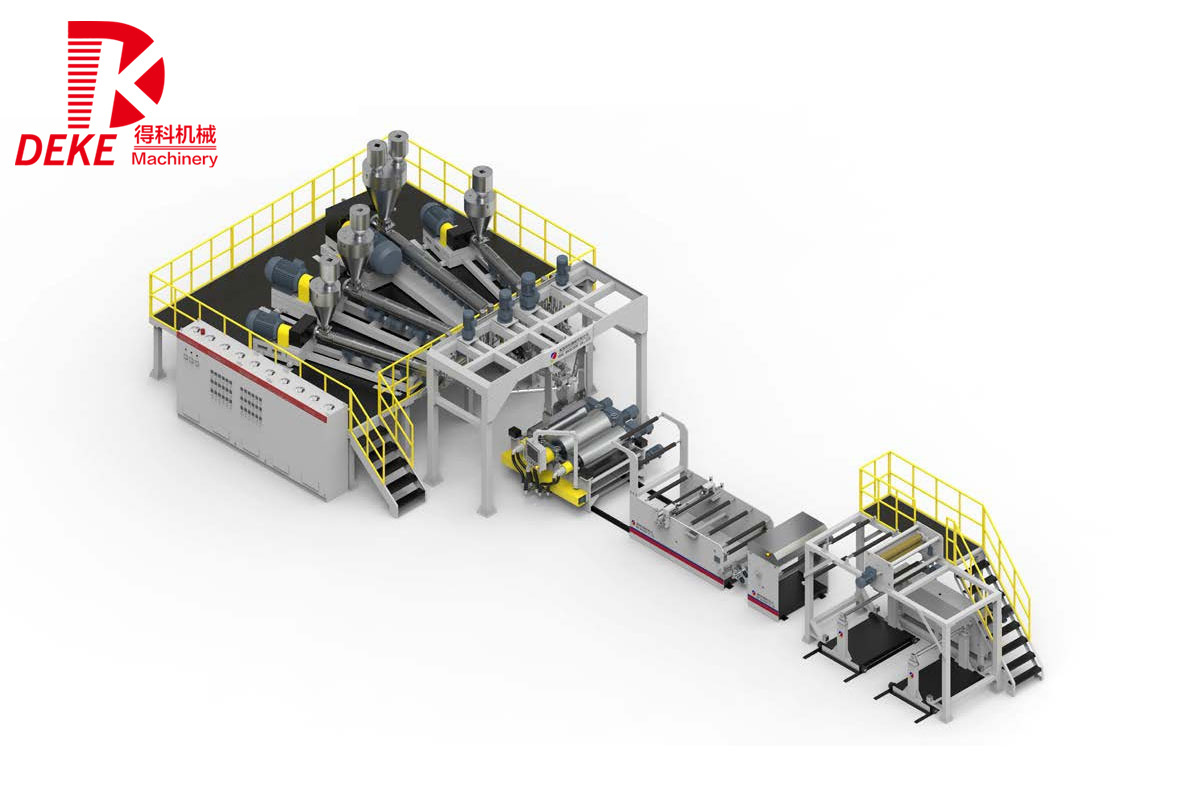
HIPS Sheet Extruder is a highly efficient equipment specially used for producing high-impact polystyrene (HIPS) sheets.
1. Working Principle
Material Plasticization
First, the HIPS raw material enters the barrel of the extruder through the hopper. A screw is arranged in the barrel, and the screw rotates under the drive of the motor. The special structural design of the screw, such as different pitches and thread depths, strongly pushes, compresses and shears the HIPS material, so that the material gradually changes from a solid state to a uniform molten state. In this process, the heating device outside the barrel provides heat to assist the plasticization of the material and ensure that the HIPS material reaches the appropriate processing temperature and viscosity.
Sheet Forming
The plasticized HIPS melt is extruded through a special die to form a sheet of material. The size and shape of the die can be adjusted according to the thickness and width of the required sheet. The extruded sheet then passes through a cooling device to quickly cool and shape it to maintain its shape and physical properties.
2. Equipment Structural Features
High-performance Screw
The screw is one of the core components of the extruder. The screw of HIPS Sheet Extruder is made of high-quality alloy steel with good wear resistance and corrosion resistance. The aspect ratio of the screw is optimized to ensure that the material has enough residence time in the barrel for full plasticization and improve the quality of the sheet.
Precision mold
Equipped with precision sheet extrusion mold. The mold is manufactured with high precision to ensure uniform thickness and smooth surface of the extruded sheet. At the same time, the structural design of the mold is easy to disassemble and clean, which is conducive to rapid mold change when producing sheets of different specifications.
Efficient cooling system
The cooling system adopts a combination of air cooling and water cooling. After the sheet is extruded, the temperature of the sheet can be quickly reduced to improve production efficiency. The air cooling part uses a strong fan to evenly blow air to cool the sheet, and the water cooling part takes away heat through components such as cooling rollers in contact with the sheet to ensure rapid shaping of the sheet.
3. Product Advantages
High sheet quality
The produced HIPS sheet has uniform thickness, good surface finish, and good physical properties, such as high impact strength and rigidity, and can be widely used in food packaging, electronic appliances, architectural decoration and other fields.
High production efficiency
The equipment runs stably and has a fast extrusion speed, which can meet the needs of large-scale production. At the same time, due to the high degree of automation of the equipment, manual intervention is reduced and production costs are reduced.
HIPS Sheet Extruder has become an ideal choice for HIPS sheet manufacturers with its advanced working principle, excellent structural design and excellent product advantages.
Previous Page:
RELATED INFORMATION

Why Choose Conical Twin Screw for Your Next Extrusion Project?
Why Choose Conical Twin Screw for Your Next Extrusion Project? Understanding Extrusion Technology In the realm of **plastic processing**, extrusion is an essential manufacturing technique that transforms raw plastic materials into usable products. The **extrusion process** involves forcing molten plastic through a die to create continuous shapes like sheets, films, and profiles. With advancements
Understanding the Advantages of Counter Rotating Twin Screw Extruders for Plastic Processing
Counter rotating twin screw extruders are pivotal in the plastic processing industry, recognized for their versatility and efficiency. Unlike single screw extruders, twin screw extruders feature two intermeshing screws that rotate in opposite directions. This design allows for enhanced material handling and processing capabilities, making them suitable for a wide array of applications. One of the

Website

Copyright©Jieyang Deke Machinery Co., Ltd.